
In most Phoenix businesses, access problems don’t show up as “security issues” at first. They show up as friction: too many keys, doors that “only one person can open,” and managers constantly getting pulled away to unlock something.
As a business grows, keys multiply. Staff changes, vendors need temporary access, and restricted areas become harder to control. Without a clear plan, key management turns into an operational risk—because access becomes unclear, inconsistent, and difficult to audit.
A professionally designed master key system replaces chaos with a simple structure: the right people can access the right doors, while ownership keeps top-level control.
When built by an experienced commercial locksmith, a master key system becomes a long-term security and operations tool—clean access hierarchy, better accountability, and a setup that can expand as your Phoenix location grows.
What a Master Key System Really Is
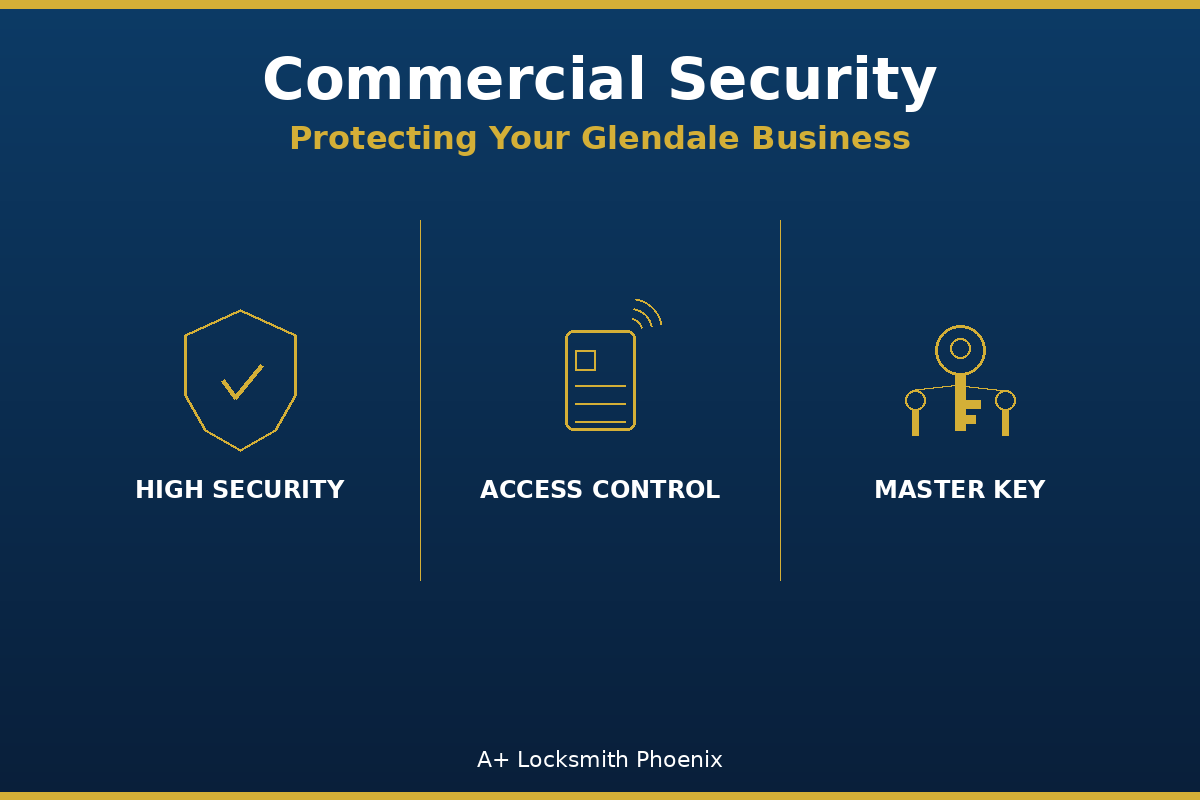
A master key system is a planned key hierarchy. Instead of every door having its own unrelated key, locks are keyed so that:
- Individual keys open only the doors assigned to that role
- Sub-master keys open a set of doors (example: one department, one floor, one building section)
- The master key opens all doors in the system (or all doors you choose)
This isn’t about “one key opens everything” for everyone. It’s about structured access that matches how your business actually operates.
If you want a quick overview of how these systems are structured for commercial properties, start here: Master Key Systems.
Why Phoenix Businesses Use Master Key Systems
A strong master key system solves both security and workflow issues.
Operational benefits
- Fewer keys in circulation (staff carry what they need, not a bulky ring)
- Less interruption for managers (fewer “can you come unlock this?” moments)
- Cleaner daily routines for opening/closing and shift changes
Security benefits
- Role-based access keeps sensitive areas limited (offices, inventory, back-of-house)
- Better control over who has what—especially when teams change
- Reduced risk from copied keys when you use documented key control policies
Business growth benefits
- You can design the system to support future expansion (new doors, new rooms, new departments) rather than rebuilding from scratch later.
For commercial decision-makers comparing providers, it’s helpful to review the full scope of commercial locksmith services and how master keying fits into broader building security.
Master Key Hierarchies That Make Sense in the Real World
The best system matches your layout and your people. Here’s a practical way to think about it.
Common access levels (example structure)
| Access Level | Typical Holder | Opens | Best For |
|---|---|---|---|
| Change Key (Individual) | Employee, tenant, specific role | One door or a small set | Offices, storage rooms, staff-only areas |
| Sub-Master Key | Supervisor, department lead | One department/zone | Restaurants (FOH/BOH), clinics, multi-room operations |
| Master Key | Owner, GM, facilities manager | Most or all doors | Multi-door properties, mixed-use spaces |
| Grand Master (Optional) | Property manager | Multiple master systems | Multi-tenant or multi-building sites |
This structure makes it possible to keep access tight without slowing operations.
Key Control: The Part Most Businesses Forget
A master key system is only as strong as the rules around it. The most secure hardware still becomes vulnerable if keys are distributed casually.
Practical key control policies that work
- Keep a written key log (who has what, and when it was issued)
- Limit master key holders to the smallest practical number
- Use “Do Not Duplicate” keyways when appropriate (depending on lock type and system design)
- Plan for turnover: retrieve keys immediately and rekey when needed
When staff transitions happen frequently, pairing your system with commercial lock rekeying can reset access without replacing all the hardware—especially useful after resignations, terminations, or lost keys.
When a Master Key System Should Include Upgrades (Not Just Rekeying)
Sometimes the goal isn’t only organizing keys—sometimes it’s improving the building’s baseline security and performance.
Situations where upgrades make sense
- Locks are worn, sticking, or inconsistent
- Doors don’t align correctly (creating latch issues)
- You need stronger protection for certain areas (cash handling, medication storage, inventory)
If the existing hardware is failing or outdated, commercial lock repair and replacement may be the right first step before master keying.
If doors sag or don’t close cleanly, it’s hard to build a reliable access system on top of a mechanical problem. Addressing door closer and hinge repairs can stabilize daily usage and reduce lock wear.
For areas that require a higher security standard, consider a planned upgrade through high-security lock installation as part of the master key design—not as an afterthought later.
Master Key Systems and Code-Driven Doors in Phoenix
Some doors aren’t “optional” from a safety and code perspective—especially in public-facing buildings.
If your business uses emergency exits or high-traffic doors, the system design must respect life-safety hardware and smooth egress. That’s where panic bars and exit devices come into the conversation—because the access plan must also keep doors safe and functional under real use.
Master Key vs. Access Control: Which One Is Better?
A master key system is a mechanical access strategy. Access control is electronic permissions (cards, fobs, codes, schedules). Many Phoenix businesses use both.
Choose a master key system when:
- You want dependable access without batteries, networks, or software
- You have multiple doors and need hierarchy
- You want a cost-effective way to organize access
Add access control when:
- You want audit trails (who entered and when)
- You need time-based access (example: vendors only during certain hours)
- You want to deactivate access without rekeying
In many commercial properties, the best approach is hybrid: mechanical structure + electronic permissions where it matters most. If you’re exploring electronic options, review access control systems alongside your master key plan.
Don’t Overlook “Small” Locks That Still Control Risk
Commercial security isn’t only exterior doors. Internal lock points often protect sensitive assets.
Examples include:
- File drawers, HR cabinets, and restricted document storage
- Office desks and inventory cabinets
- Safes or secure storage for cash, controlled items, or valuables
For internal security improvements, many businesses include filing cabinet and desk locks as part of a broader access plan.
And for higher-value secure storage, it’s common to coordinate master key work with safe installation and opening, especially when ownership wants clear control over who can access secure containers.
What Implementation Looks Like (Simple, Practical)
A professional master key project typically follows a structured process:
Step-by-step (high level)
- Walkthrough & door mapping: identify all doors, zones, and access needs
- Define hierarchy: decide who needs what level of access
- Confirm hardware condition: repair/replace components that will cause problems
- Key system buildout: rekey and/or install hardware according to hierarchy
- Key issuance plan: distribute keys with a log and clear rules
- Testing and documentation: confirm doors work smoothly and records are complete
If you’ve had recurring lockouts during daily operations, it’s smart to address that pattern as part of system planning. Some businesses also review business lockout solutions to reduce disruptions caused by lost keys, jammed locks, or access gaps.
FAQs (Master Key Systems for Phoenix Businesses)
1) Does a master key system make my building less secure because one key opens many doors?
Not when designed correctly. The system improves security by limiting who gets higher-level access and documenting distribution.
2) Can we add doors later if we expand?
Yes. A well-designed system can be structured for future expansion. Planning for growth upfront prevents redesign later.
3) What happens if a master key is lost?
That’s a serious event. Your locksmith should advise on containment options, including rekeying affected levels and improving key control policies.
4) Should we rekey when an employee leaves?
If keys weren’t returned, or if access risk is high, rekeying is often the cleanest reset. In many cases, targeted rekeying is enough rather than replacing every lock.
5) How do we decide who gets a master key?
Keep the list short: ownership, GM, or facilities management. The fewer master key holders, the stronger the system.
6) Is this only for large buildings?
No. Restaurants, retail, clinics, offices, and small warehouses can benefit—especially if keys are already causing delays or confusion.
Conclusion
A master key system is one of the simplest ways to turn messy access into a clear, scalable structure—especially for Phoenix businesses managing staff changes, restricted areas, and day-to-day operational flow. The real benefit isn’t just convenience; it’s control: defined permissions, reduced disruption, and a security plan that supports growth.
If you want to explore the right hierarchy for your property, start with the Phoenix service area page to keep the scope local, review the team’s background on the About Us page, and then request next steps through the Contact page.
For a broader view of residential, commercial, automotive, and emergency options in one place, you can also reference the full locksmith services hub.